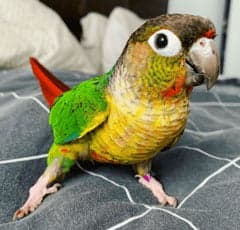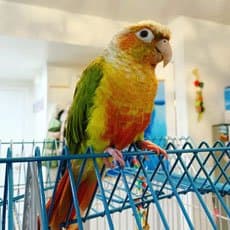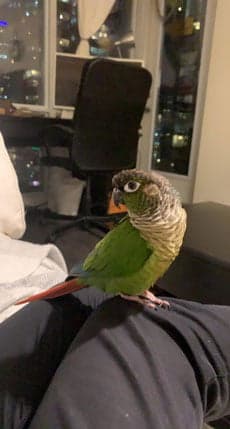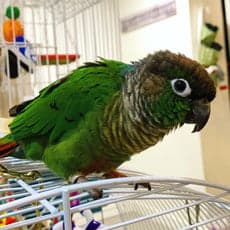
Conures are busy, social birds, and most of what goes wrong with them is a consequence of that: they get bored, they get stressed, and they tell you about it through their feathers before they tell you any other way.
Feather plucking
The most common problem, and almost never a feather problem. It is usually stress, boredom or diet — sometimes all three.
What you see first is bald patches, damaged or chewed feathers, and grooming that goes on far longer than it used to. A conure that has started plucking is a conure whose day has changed: a new room, a new schedule, a household that is out more than it was.
Respiratory infections
The one to take seriously fastest. Sneezing, discharge from the nostrils, or any difficulty breathing means a vet, not a wait-and-see. Birds have a respiratory system that leaves very little margin, and a chest infection can move from "seems a bit off" to serious in a day.
Psittacosis
A bacterial infection, and one of the few that can pass to people. The signs are vague by design — lethargy, going off food, feathers fluffed up for long periods — which is exactly why it is worth knowing the name. If a bird is quiet and puffed up and not eating, that combination is a phone call.
Nutritional deficiencies
A seed-only diet is the usual cause, and it shows up indirectly: a weak immune system, poor feather quality, low energy. Nothing here looks like an emergency, which is the problem — it looks like a bird that is just a bit dull, for months.
Beak and feather disease
A viral condition affecting how feathers and beak grow. Abnormal feather growth, a beak that is weak or brittle, feather loss that does not follow a normal moult. This one needs a diagnosis rather than a guess.
Keeping ahead of it
- Feed properly. Pellets as the base, with fresh fruit and vegetables. This one change prevents more than everything else on the list combined.
- Keep it clean. The cage and, especially, the food and water dishes — bacteria build up in a dish long before anything looks dirty.
- Give them something to do. Toys that change, and time out with people. Boredom is a health issue in a bird this social, not a mood.
- Book the annual check. An avian vet finds what a bird is hiding, which is the whole point.
When it stops being something to watch
Call a vet if you see any of these:
- sudden weight loss
- a change in behaviour you cannot explain
- any difficulty breathing
- not eating
Our list of avian clinics in Ontario, with phone numbers, is here: Ontario's avian vets →
While you are away
Most of these show up as a change in the ordinary day — less food gone, different droppings, a bird sitting differently. That is what boarding in a room with people in it is for: somebody notices on the day rather than at the end of the week, and tells you.