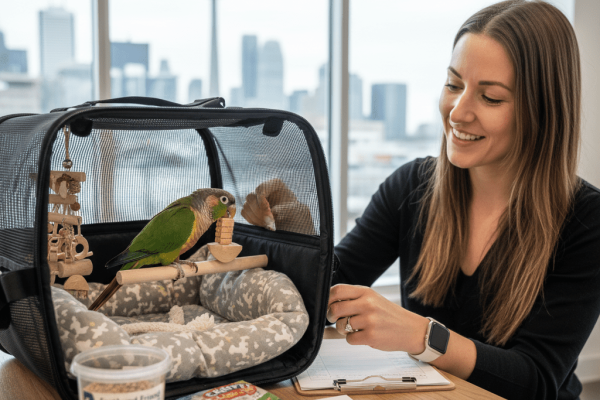
When you need to travel or take a break from your daily routine, arranging care for your pet bird can feel stressful. Birds are sensitive, intelligent animals that thrive on familiarity and routine, so preparing them properly for an overnight or extended stay makes all the difference. Whether you’re dropping your bird off at a boarding service or arranging care in your home, these practical steps will help ensure your feathered companion stays safe, calm, and happy while you’re away.
1. Start with a Familiar Routine
Birds find security in consistency. A few days before your trip:
Stick to your bird’s regular feeding and sleep schedule
Offer favorite toys and enrichment at usual times
Keep social interaction consistent
Creating stability before departure helps ease anxiety and makes the transition smoother when you leave.
2. Gather Essential Health and Nutrition Details
Before arranging boarding or a sitter:
Visit your avian veterinarian for a wellness check
Get updated vaccination and health records
Pack detailed instructions for feeding, medications, and special care
Write down any quirks, food preferences, or behavior notes — this helps caregivers provide personalized attention.
3. Pack a Comfortable Travel or Stay Kit
A well-prepared kit makes your bird feel at home even when you’re not there. Include:
Enough food for the stay (plus a little extra)
Favorite toys and perches
Comfort items like a familiar towel or blanket
Treats for enrichment
Any medications (clearly labeled)
Label everything with your bird’s name and your contact details to avoid mixups.
4. Help Your Bird Adjust to the Environment
Whether your bird will stay with a caregiver or at a boarding facility, take time to:
Introduce your bird’s carrier a few days before
Let them explore their temporary space briefly
Place familiar items from home inside the cage or play area
This helps your bird feel less overwhelmed when it’s time to stay overnight or longer.
5. Provide Clear Instructions for Caregivers
Good communication with caregivers is key. Make sure they know:
Your bird’s favorite foods and feeding schedule
How to handle your bird safely
Signs of stress or discomfort
Emergency contact numbers (including your avian vet)
Clear written instructions reduce guesswork and help your bird feel secure.
6. Talk to Your Bird Calmly Before Leaving
Birds pick up on your emotions and tone. Before your departure:
Speak softly and reassuringly
Avoid lengthy goodbyes — these can increase stress
Offer a favorite treat or toy
A calm send-off gives your bird confidence and helps reduce separation anxiety.
7. Keep the Environment Comfortable
Ask caregivers to maintain a peaceful, bird-friendly space:
Comfortable surroundings help your bird settle in more easily.
8. Follow Up During the Stay
If possible:
Ask caregivers for brief photo or video updates
Check in on your bird’s mood and activity
Confirm feeding and behavior are as instructed
These updates help you relax and ensure your bird is doing well while you’re away.
9. Welcome Your Bird Home With Care
When your trip ends:
Bring your bird home during a calm part of the day
Allow time for adjustment before changing routines
Notice any behavior changes and offer extra reassurance
Returning to familiar sights and sounds eases re-entry into your normal routine.