


Read this first. Regulations change without notice and avian influenza zones can change with little warning. This page is guidance, not authorisation. Confirm every requirement with CFIA, APHIS, USFWS and ECCC before you travel — contact numbers are at the bottom of this page. Do not book a flight or drive to a border on the strength of this page alone.
Short answer: it depends entirely on where the bird is coming from. From the United States, the law imposes no quarantine at all – only an owner declaration. From anywhere else, your bird needs a Ministerial permit, and any quarantine or testing is a condition CFIA attaches to that specific permit, not a published rule you can look up in advance.
That distinction is the whole article. If you’ve read that every bird entering Canada sits in a 45-day home quarantine with a mid-point cloacal swab, we went looking for that rule and could not find it anywhere in the law. Here’s what the law actually says, and what that means for planning your bird’s move.

Where the quarantine question actually gets answered
The controlling text is the Import Reference Document, which is incorporated by reference into the Health of Animals Regulations – meaning it isn’t guidance, it’s the law itself, last amended 2025-10-08. Section 13 of that document covers birds of the parrot family and song birds, but only when they’re arriving from the United States. It sets out exactly what the importer must do: nothing more than a declaration to a Customs Officer at the border. There’s no vet certificate requirement (section 9, the poultry certificate rule, expressly excludes “songbirds and parrots referred to in section 13”), and there’s no quarantine clause anywhere in section 13.
That’s not an oversight. The same document imposes quarantine explicitly where CFIA wants it – 30 days for swine under section 7, quarantine from the moment of arrival for feeder calves under section 17. Whoever wrote this regulation knows exactly how to write a quarantine requirement into it. They didn’t write one for parrots or song birds coming from the US. The silence is the rule.
Parrots arriving from anywhere other than the US – which is every country except the US, full stop – don’t qualify for section 13 at all. Section 13(3) says non-US pet parrots “may only be imported in accordance with Paragraph 12(1)(a)”, meaning under an individual Ministerial permit. That permit is where any quarantine requirement would actually live, and it’s set case by case.

Coming from the United States: what the law requires (and doesn’t)
If you’re a US resident or a Canadian bringing your own pet bird in from the US, section 13 is your route, and it’s simpler than most people expect. You need to be the owner of the bird and you need to physically accompany it – a family member can’t bring it in on your behalf under this section. At the border, you make a declaration confirming, for each bird:
- It’s your personal pet and not for sale
- It hasn’t been in contact with other birds
- It’s been in your personal possession in Canada or the US for the 90 days immediately before the date you enter Canada
The 90-day clock runs to the date of entry, and the possession has to have been in Canada or the US specifically – not a third country. There’s also a limit that rarely gets mentioned anywhere: no one in your household can have imported a bird under section 13 in the 90 days before your entry date. In practice, that caps this route at roughly one pet bird per household per 90 days.
No quarantine. No vet certificate. No permit. Just the declaration, made honestly, at the point of entry. If an inspector has reason to believe the bird isn’t healthy, they can refuse admission – or if it’s already been let in, order it removed from Canada or destroyed. That’s the enforcement backstop, not a quarantine period.
Unconfirmed: we could not verify this against an official source — specifically, whether any US state or the departure airport imposes its own export health certificate requirement for parrots leaving the US. Please confirm with USDA APHIS Veterinary Services at aphis.usda.gov/pet-travel before you rely on it for your own bird.
Coming from anywhere else: the permit is the quarantine question
This is where most of the confusion online comes from, because people search for “quarantine” expecting a fixed number of days, and instead find a process that’s genuinely case by case.
A parrot or song bird arriving from any country other than the US doesn’t qualify as a section 13 pet bird at all. It falls under paragraph 12(1)(a) of the Health of Animals Regulations, which means it can only be imported under a Ministerial permit issued by CFIA. The Import Reference Document also states plainly, in its general provisions, that “the world is an undesignated area for regulated animals” – no country or region currently gets treated as lower-risk for import purposes. Everything routes through the same permit process regardless of the country you’re coming from.
Here’s the part that matters for your planning: the permit itself is where CFIA sets any conditions – and that can include quarantine length, the facility it happens at, pre-import or post-import testing, and how the bird is transported. Those conditions get set individually, based on the species, the country of origin, and the current disease situation for that country (avian influenza status, for example). There’s no published table of “bird X from country Y quarantines for Z days” that you can check in advance, because the document doesn’t operate that way for non-US pet birds – the conditions live inside the individual permit CFIA issues you, not in a general rule.
If you don’t apply and simply arrive with a bird that doesn’t qualify, the Health of Animals Act gives CFIA the authority to order it removed from Canada within a specified period, and you’re required to comply. That’s not a scare tactic – it’s section 18 of the Act, applied through the Part IV provisions of this same document.
What that means if you’ve read about a 45-day home quarantine
If you’ve come across a specific figure – 45 days, a day-21 test, a requirement that your home be pre-approved before the permit is issued – we looked for that in the Import Reference Document and it isn’t there. It may describe someone’s individual permit conditions, a different country’s rules, or an outdated policy. Whatever it is, it isn’t a published blanket rule you can rely on for your own bird. Don’t plan travel dates, book flights, or give notice on housing based on a number like that until CFIA confirms it in writing for your specific permit.
| Origin | Legal route | Quarantine requirement in the law |
|---|---|---|
| United States | Section 13 owner declaration | None specified in section 13 |
| Any other country | Ministerial permit under paragraph 12(1)(a) | Set individually as a condition of the permit – not a published fixed period |
How to find out what your permit will actually require
Since the answer genuinely depends on your permit and not on a rule you can look up, the only reliable way to plan is to ask CFIA directly, early, and in writing.
- Apply or enquire before you commit to travel dates. If a Ministerial permit is required, the conditions attached to it – including anything about quarantine, testing, or where the bird stays after arrival – come from CFIA as part of issuing that permit. You need that answer before you book flights or line up housing, not after.
- Ask specifically what conditions CFIA expects to attach for your bird’s species and country of origin, given the current disease situation there. Avian influenza status in the origin country is one of the variables that can change what gets attached to a permit.
- Get any conditions in writing before you finalize travel or make commitments you can’t easily undo, such as giving up housing in your current country or booking non-refundable flights.
- Don’t rely on what another owner’s permit required. Because conditions are set case by case, someone else’s experience with a different species, country or timing tells you very little about what yours will be.
If your move is coming from the US and you genuinely meet all of section 13’s conditions, this whole process is far simpler – it’s the declaration, not a permit application. It’s worth confirming which route actually applies to you before you assume you’re in the harder, case-by-case category.
Related reading on this site
For the full walkthrough of a US move, see Taking Your Bird Across the Canada-US Border: The Complete 2026 Walkthrough. If you’re moving from a country other than the US, Bringing a Pet Bird Into Canada: The CFIA Rules Explained in Plain English covers the permit process in more detail. And if your move is part of a bigger relocation with a lot of moving pieces, Moving Abroad With a Pet Bird: The Complete Canadian Guide (2026) is the hub for that.
Frequently asked questions
Does every pet bird entering Canada get quarantined?
No. Birds arriving from the US under section 13 of the Import Reference Document have no quarantine requirement in the law – just an owner declaration. Birds arriving from any other country need a Ministerial permit, and any quarantine is a condition of that individual permit rather than a fixed rule.
Is there a set number of days my bird will be quarantined?
Not that appears anywhere in the Import Reference Document. For non-US birds, quarantine length (if any) is set individually as part of the Ministerial permit, based on species, origin country and disease situation. There’s no published day-count you can rely on before applying. Unconfirmed: we could not verify this against an official source — specifically, whether CFIA can provide a typical range for a given species/country combination in advance of a formal permit application. Please confirm with the Canadian Food Inspection Agency at 1-800-442-2342 before you rely on it for your own bird.
I’ve read about a 45-day quarantine and a day-21 test – is that real?
We couldn’t find that specific requirement in the Import Reference Document, which is the text legally incorporated into the Health of Animals Regulations. It may reflect an individual permit’s conditions or outdated information. Don’t treat it as a general rule until CFIA confirms your own permit’s conditions in writing.
Does my home need to be pre-approved before I get a permit?
We found no requirement for premises pre-approval in the Import Reference Document itself for parrots or song birds. If your specific Ministerial permit application requires details about where the bird will be kept, that would come from CFIA as part of your individual application. Unconfirmed: we could not verify this against an official source — specifically, whether CFIA requests premises information as part of a paragraph 12(1)(a) permit application, and at what stage. Please confirm with the Canadian Food Inspection Agency at 1-800-442-2342 before you rely on it for your own bird.
Can a family member bring my bird into Canada from the US for me?
No. Section 13 requires that the importer be the owner and accompany the bird personally. A family member bringing the bird in on your behalf doesn’t meet this requirement.
What if I bring more than one bird from the US within a few months?
The Import Reference Document limits section 13 imports to effectively one pet bird per household in any 90-day period – no one in your household can have already imported a bird under section 13 in the 90 days before your entry date.
What happens if my bird doesn’t qualify when I arrive?
Under the Health of Animals Act, CFIA can order the bird removed from Canada within a specified period, and compliance is required. If an inspector has reason to believe the bird isn’t healthy, they can also refuse admission outright.
Does it matter which country I’m flying from if it’s not the US?
Not for which route applies – the Import Reference Document treats the world as an undesignated area, so there’s no country that gets easier treatment. The country of origin can still affect what conditions get attached to your individual Ministerial permit, particularly around current disease situations.
If your bird’s permit is going to take weeks to resolve and you can’t have your bird with you in the meantime, that’s a boarding question rather than a paperwork one – see What Do I Do With My Bird While I Sort Out the Move? for how that works, or get a quote directly at our booking page. Rates current at time of writing – check /pricing/ for today’s.
Related guides in this series
- Importing a Pet Bird to Canada: The Complete CFIA Guide (2026)
- Moving Abroad and You Can’t Take Your Bird: Board, Rehome, or Wait
- Long-Term Bird Boarding While You Relocate: 30, 60 and 90+ Days
- Taking Your Bird from Canada to the United States: Driving vs Flying
- Does Your Bird Need a US Import Permit, Health Certificate or Quarantine? (From Canada, Usually None of Them)
- The CFIA Import Permit for a Pet Bird: How to Apply and What to Expect
- Coming Back to Canada With Your Own Bird: Why the Country You Are Returning From Decides Everything
Who to call before you travel
Confirm every requirement below with the agency itself. These are the people who
can actually authorise your bird’s movement — we cannot.
Every number below was checked against the agency’s own website on
27 July 2026. Government phone numbers and web pages still change without notice.
If one does not connect, find the agency through its own official site rather than trusting
what is printed here.
- Canadian Food Inspection Agency (CFIA) — import and export of live
birds, health certificates, permits: 1-800-442-2342 from
Canada and the US, or 1-613-773-2342 local and
international, 8 am to 7 pm EST Monday to Friday except holidays. CFIA names
services related to travelling with pets as something its area offices handle —
for the GTA that is the Mississauga animal health office,
289-247-4100, 8 am to 4 pm
· inspection.canada.ca - Environment and Climate Change Canada — CITES permitting — export and
import permits for CITES-listed species, and what documents exist for repeat crossings:
1-855-869-8670
· cites@ec.gc.ca - Canada Border Services Agency — what happens at the border itself,
declarations and inspection fees: 1-800-461-9999, Monday to
Friday 8 am to 4 pm local time. Press 0 to reach an agent; CBSA’s published
service standard is to answer within 20 minutes - USDA APHIS — the US pet-travel hub, with separate paths for import,
export and interstate movement, and the list of which birds count as pets at all:
aphis.usda.gov/pet-travel - US Fish & Wildlife Service — CITES and Wild Bird Conservation Act
permits, applied for through the ePermits portal at
fws.gov/permits. The agency
contact centre is 1-800-344-9453
· info@fws.gov
What we can and cannot help with
We cannot help with paperwork. Bird Sitting Toronto is a bird
boarding and care business. We are not a customs broker, an immigration consultant, a
veterinary practice or a legal adviser. We do not file permits, complete applications or
deal with any agency on your behalf, and we cannot guarantee any outcome at any border.
Everything on this page is information only.
There are two things we can do. If your bird cannot travel with you
— because the paperwork is still in progress, the airline will not carry it, or the
timing simply does not work — we can board
your bird in the GTA for as long as you need, including by the month. And if it
becomes clear the bird genuinely cannot come with you, we can help you
rehome it to a good home rather
than leaving you to sort that out alone.
We publish this guide because our boarding clients ask us about it constantly, and
because the answer is genuinely hard to assemble from the primary sources.
Corrections
Where we have found a material error on this page — a wrong fee, day-count, phone number or country status — we fix it and record the fix here rather than editing quietly.
- 27 July 2026 — We had listed 1-800-358-2104 as the US Fish & Wildlife Service Office of Law Enforcement number. That number is widely repeated online but does not appear anywhere on the current fws.gov, so we have replaced it with the contact route the agency does publish — the ePermits portal and its agency contact centre. Every other number in that section was re-checked against the agency’s own website the same day, and CBSA’s border information line has been added.



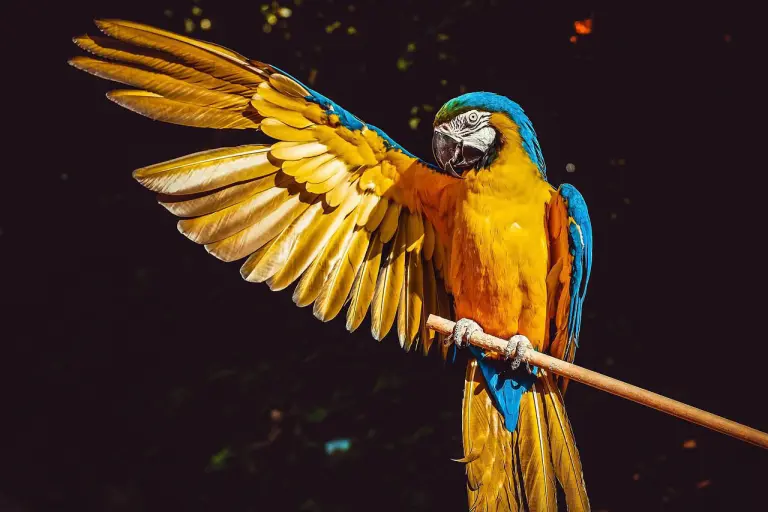
Cargo Hold vs Cabin for Birds: What Really Happens
Can a bird fly in the cargo hold? Here’s what airlines allow, the real risks involved, and why cabin travel is safer for your feathered companion.
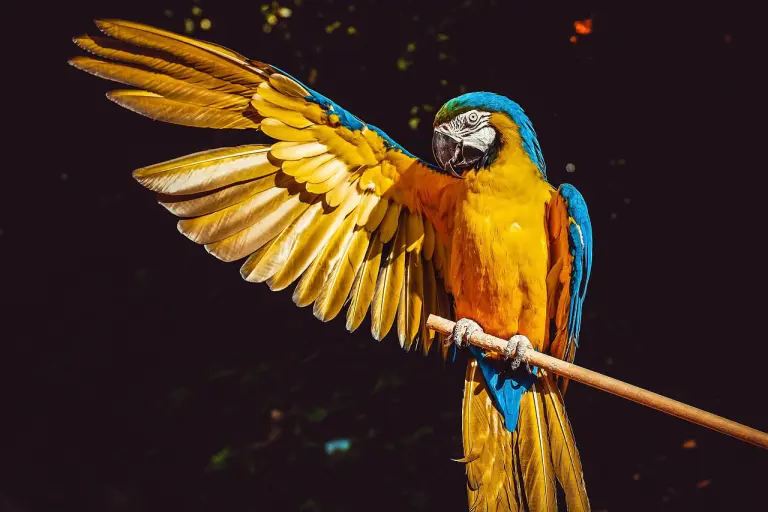
Is Flying Safe for a Parrot? What Canadian Law Actually Requires
Is flying stressful for parrots? Learn what Canadian law requires for safe travel and how to tell if your bird is truly ready to fly.
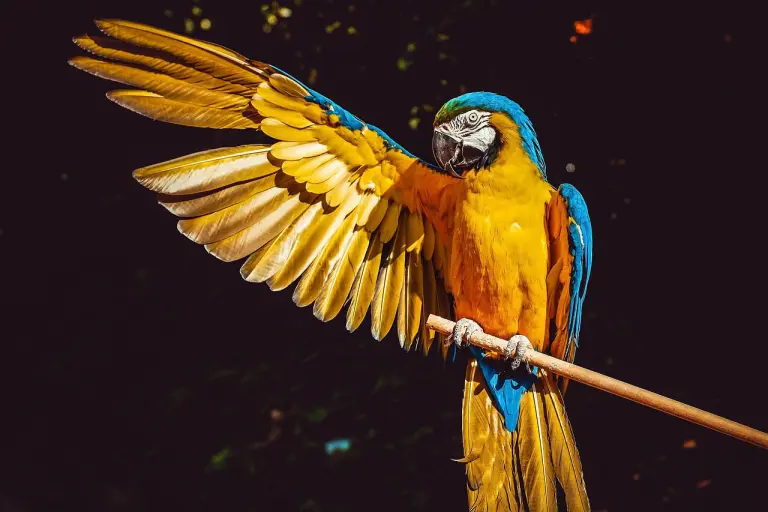
Microchipping and Leg Bands for International Bird Travel
Learn how to microchip your parrot for travel in Canada, plus leg band rules, so your bird meets international ID requirements before you fly.