


Read this first. Regulations change without notice and avian influenza zones can change with little warning. This page is guidance, not authorisation. Confirm every requirement with CFIA, APHIS, USFWS and ECCC before you travel — contact numbers are at the bottom of this page. Do not book a flight or drive to a border on the strength of this page alone.
No — not under the same simple rule that applies to birds coming from the United States. Canadian law gives American pet birds a straightforward owner-declaration route with no permit. A parrot arriving from India — or from anywhere else on earth other than the USA — can only enter Canada under a Ministerial import permit, and whether that permit is granted is decided case by case.

Canada does not have a list of banned countries — it has two completely different routes
It is tempting to search for “countries banned from bringing birds to Canada” and expect a tidy list. That list does not exist, and looking for it is the wrong question. The Import Reference Document — which is legally incorporated by reference into the federal Health of Animals Regulations, so it is primary law, not a guideline — sets out exactly two ways a pet parrot or songbird can enter Canada. Which one applies to you depends entirely on which country the bird is travelling from, not on the species, and not on whether that country happens to appear on some blog’s blocklist.
Route 1: the owner declaration under Section 13 — United States only
Section 13 of the Import Reference Document creates a genuinely easy route: if you personally own the bird and you are bringing it with you from the United States, you do not need a veterinary health certificate at all. Section 9 (which covers poultry) expressly carves songbirds and s.13 parrots out of that certificate requirement. Instead, you make a declaration to a Customs Officer at the port of entry, confirming that the bird:
- is your personal pet and is not for sale
- has not been in contact with other birds
- has been in your personal possession, in Canada or the United States, for the 90 days immediately before the date you enter Canada
Two details catch people out. First, you — the owner — must be the one bringing the bird in; a family member cannot carry it through the border on your behalf. Second, no one else in your household can have imported a bird under Section 13 in the 90 days before your entry date — in practice, this route allows roughly one pet bird per household every 90 days (source: CFIA Import Reference Document, s.13, s.9). We’ve written the full walkthrough of that route, including what the declaration looks like in practice, in Taking Your Bird Across the Canada-US Border: The Complete 2026 Walkthrough.
Route 2: the Ministerial permit under paragraph 12(1)(a) — everyone else
If your bird is not arriving from the United States, Section 13 simply does not apply to you — not “usually,” not “unless your country is on a list.” It does not apply, full stop, regardless of species. A parrot arriving from India, Pakistan, the Philippines, China, the UK, or literally any other country falls outside the pet-bird declaration entirely and can only be imported under paragraph 12(1)(a) of the Health of Animals Regulations: a Ministerial import permit, applied for and granted (or refused) by CFIA on a case-by-case basis (source: CFIA Import Reference Document).
This is the correction worth sitting with: it isn’t that “most countries are fine and a few are banned.” It’s the reverse. The USA is the one country with an easy, permit-free route for a personally-owned pet bird. Every other country in the world routes through the same permit process — the differences between, say, India and the UK show up in what the permit application requires and whether CFIA grants it, not in whether a permit is required at all.
| Where the bird is travelling from | Legal route | Health certificate? | Who decides? |
|---|---|---|---|
| United States | Section 13 owner declaration | Not required | Customs Officer at entry, on the spot |
| India, Pakistan, Philippines, China, UK, or any other country | Paragraph 12(1)(a) Ministerial permit | Determined by permit conditions | CFIA, in advance, case by case |

What actually decides whether a permit is granted
Because there is no country blocklist, the honest answer to “can I bring my parrot from India” is: it depends on what CFIA’s risk assessment says about your bird’s origin, its health status, and current disease conditions — not on a fixed yes/no by nationality. Two facts from the Import Reference Document explain why this is treated so cautiously:
- Part III states plainly that “the world is an undesignated area for regulated animals” — no country or region currently carries an equivalent-risk or low-risk designation that would simplify the process.
- Part IV sets out what happens if an animal doesn’t qualify for entry: the importer is ordered to remove it from Canada under section 18 of the Health of Animals Act, within a specified period, and must comply.
In plain terms, there is no safety net if the permit process goes wrong after the bird has already travelled. This is exactly why the application has to be sorted out — and the permit in hand — before your bird gets on a plane, not after.
Avian influenza conditions are the other moving part. CFIA’s import conditions for birds shift with current outbreak data, sometimes on short notice, and a country’s status can change between the week you apply and the week you fly. This is precisely the kind of detail that must come from CFIA directly rather than from any article, however carefully sourced: Unconfirmed: we could not verify this against an official source — specifically, current avian-influenza-related import conditions and any country-of-origin restrictions applicable to a pet parrot from India. Please confirm with the Canadian Food Inspection Agency at 1-800-442-2342 before you rely on it for your own bird..
How to check your bird’s actual status — don’t rely on a published list
CFIA’s Automated Import Reference System, known as AIRS, is the tool that generates country- and commodity-specific import requirements. It’s built for exactly this question — “I have a bird, it’s coming from this country, what do I need?” — and it will give you a different answer for a parrot from India than for one from the UK, because the underlying disease-risk data is different even though both fall under the same 12(1)(a) permit route.
The practical steps:
- Start at CFIA’s animal imports pages (inspection.canada.ca) and locate the AIRS tool for live animal imports.
- Search using your bird’s species and country of origin — not a generic “parrot” search, since requirements can vary by species within the same shipment.
- Where AIRS output is ambiguous, or where you can’t find a species-specific entry, contact CFIA’s Animal Health Import/Export Division directly rather than guessing from the tool alone.
Unconfirmed: we could not verify this against an official source — specifically, exact AIRS navigation path and commodity code for a personally-owned pet parrot, plus current contact details for the Animal Health Import/Export Division. Please confirm with the Canadian Food Inspection Agency at 1-800-442-2342 before you rely on it for your own bird.
The permit application itself
Because the permit is decided case by case, the specifics of what CFIA will ask for — testing, isolation conditions before travel, documentation of the bird’s history, any facility inspection — are set at the time of application and can vary. We are not going to guess at figures here, because a wrong fee or day-count is exactly the kind of error that costs a reader their bird:
- Unconfirmed: we could not verify this against an official source — specifically, current application fee, if any, for a paragraph 12(1)(a) Ministerial import permit for a personally-owned parrot. Please confirm with the Canadian Food Inspection Agency at 1-800-442-2342 before you rely on it for your own bird.
- Unconfirmed: we could not verify this against an official source — specifically, typical processing time between a complete permit application and a decision. Please confirm with the Canadian Food Inspection Agency at 1-800-442-2342 before you rely on it for your own bird.
- Unconfirmed: we could not verify this against an official source — specifically, specific pre-export testing, certification, or isolation requirements CFIA sets for a pet parrot travelling from India under a 12(1)(a) permit. Please confirm with the Canadian Food Inspection Agency at 1-800-442-2342 before you rely on it for your own bird.
- Unconfirmed: we could not verify this against an official source — specifically, whether any post-arrival quarantine period applies to permitted pet parrot imports, and its length. Please confirm with the Canadian Food Inspection Agency at 1-800-442-2342 before you rely on it for your own bird.
None of that is BST’s area — we aren’t a customs broker, we don’t file permits, and we don’t liaise with CFIA on a client’s behalf. This page is information, not a substitute for calling CFIA. For the plain-English rundown of how the CFIA process fits together once you’re in the permit stream, see Bringing a Pet Bird Into Canada: The CFIA Rules Explained in Plain English.
Don’t forget CITES on top of the CFIA permit
CFIA’s import permit governs animal health risk. It is a separate question from CITES — the international treaty controlling trade in many parrot species, administered in Canada by Environment and Climate Change Canada. Depending on the species, you may need a CITES export permit from the country of origin and a corresponding Canadian import permit, in addition to the CFIA health permit. Requirements vary by species and by the CITES appendix it’s listed under (source: CITES Secretariat). Unconfirmed: we could not verify this against an official source — specifically, CITES appendix listing and permit requirements for the specific parrot species being imported, both from the country of export and from Environment and Climate Change Canada. Please confirm with Environment and Climate Change Canada at 1-855-869-8670 or cites@ec.gc.ca before you rely on it for your own bird..
If you’re relocating and the permit is going to take a while
A permit application is not something you rush through the week before a flight, and plenty of owners moving to Canada find themselves needing somewhere stable and safe for their bird to stay while CFIA and, if relevant, CITES paperwork works through — whether that’s weeks or considerably longer. That’s the one part of this process BST can actually help with: boarding. We don’t file permits, and we don’t advise on the application — but if your bird needs a settled place to live while you sort the paperwork, a monthly boarding stay is generally the more practical option than day rates for a stay this length (rates current at time of writing — check /pricing/ for today’s). If that’s where you are in the process, you can get a quote here. For the fuller picture of staged relocation and what to do with a bird during a move, see What Do I Do With My Bird While I Sort Out the Move? and our broader Moving Abroad With a Pet Bird: The Complete Canadian Guide.
Frequently asked questions
Is there an official list of countries banned from bringing pet birds into Canada?
No. There is no published blocklist. The Import Reference Document instead sets out two routes: an owner-declaration route that applies only to birds from the United States, and a Ministerial permit route under paragraph 12(1)(a) that applies to every other country. Country-specific detail comes from CFIA’s AIRS system and the permit decision itself, not from a fixed list.
Can I bring my parrot from India to Canada without a permit?
No. Section 13’s owner-declaration route applies only to pet birds arriving from the United States. A parrot arriving from India falls under paragraph 12(1)(a) and requires a Ministerial import permit from CFIA, regardless of the species (source: CFIA Import Reference Document).
Does my bird’s species affect which route applies?
No — the route is determined by the country the bird is travelling from, not the species. A budgie and an African grey coming from the United States both fall under Section 13; a budgie and an African grey coming from anywhere else both fall under the 12(1)(a) permit route. Species and country-specific health conditions can affect what the permit requires, but they don’t change which route applies.
What happens if my bird arrives in Canada without the right permit?
Under Part IV of the Import Reference Document, if an animal doesn’t qualify for entry, the importer is ordered to remove it from Canada under section 18 of the Health of Animals Act within a specified period, and must comply. An inspector who has reason to believe the bird is not in good health can also refuse admission, or, if it’s already been admitted, order it removed from Canada or destroyed.
Where do I find out exactly what my bird needs before I book flights?
Query CFIA’s Automated Import Reference System (AIRS) using your bird’s species and country of origin, and confirm anything unclear directly with CFIA’s Animal Health Import/Export Division before you finalise travel. Don’t rely on a blog’s summary — including this one — for the final answer on your specific bird and route.
Can a family member bring my bird into Canada for me under the US route?
No. Under Section 13, the importer must be the owner of the bird and must personally accompany it into Canada. This route cannot be used by someone bringing the bird in on the owner’s behalf.
Does Bird Sitting Toronto handle the permit application for me?
No. BST is a boarding, sitting and rehoming service based in Mississauga, Ontario — it does not file permits, complete applications, liaise with CFIA or ECCC, act as a customs broker, or give immigration advice. If your bird needs somewhere to stay while your permit is processed, that’s boarding, and that’s what we can help with.
Is CITES a separate requirement from the CFIA import permit?
Yes. The CFIA permit addresses animal health risk; CITES addresses international trade controls on many parrot species and is administered in Canada by Environment and Climate Change Canada. Depending on the species, you may need both a CITES permit and a CFIA import permit, and the requirements for each are assessed separately.
Related guides in this series
- Moving Abroad and You Can’t Take Your Bird: Board, Rehome, or Wait
- Importing a Pet Bird to Canada: The Complete CFIA Guide (2026)
- Long-Term Bird Boarding While You Relocate: 30, 60 and 90+ Days
- Taking Your Bird from Canada to the United States: Driving vs Flying
- The Wild Bird Conservation Act: Why the US Can Refuse Your Parrot Even When USDA Doesn’t
- Two Unsettled Questions About Taking a Parrot to the US (and How to Get an Answer in Writing)
Who to call before you travel
Confirm every requirement below with the agency itself. These are the people who
can actually authorise your bird’s movement — we cannot.
Every number below was checked against the agency’s own website on
27 July 2026. Government phone numbers and web pages still change without notice.
If one does not connect, find the agency through its own official site rather than trusting
what is printed here.
- Canadian Food Inspection Agency (CFIA) — import and export of live
birds, health certificates, permits: 1-800-442-2342 from
Canada and the US, or 1-613-773-2342 local and
international, 8 am to 7 pm EST Monday to Friday except holidays. CFIA names
services related to travelling with pets as something its area offices handle —
for the GTA that is the Mississauga animal health office,
289-247-4100, 8 am to 4 pm
· inspection.canada.ca - Environment and Climate Change Canada — CITES permitting — export and
import permits for CITES-listed species, and what documents exist for repeat crossings:
1-855-869-8670
· cites@ec.gc.ca - Canada Border Services Agency — what happens at the border itself,
declarations and inspection fees: 1-800-461-9999, Monday to
Friday 8 am to 4 pm local time. Press 0 to reach an agent; CBSA’s published
service standard is to answer within 20 minutes - USDA APHIS — the US pet-travel hub, with separate paths for import,
export and interstate movement, and the list of which birds count as pets at all:
aphis.usda.gov/pet-travel - US Fish & Wildlife Service — CITES and Wild Bird Conservation Act
permits, applied for through the ePermits portal at
fws.gov/permits. The agency
contact centre is 1-800-344-9453
· info@fws.gov
What we can and cannot help with
We cannot help with paperwork. Bird Sitting Toronto is a bird
boarding and care business. We are not a customs broker, an immigration consultant, a
veterinary practice or a legal adviser. We do not file permits, complete applications or
deal with any agency on your behalf, and we cannot guarantee any outcome at any border.
Everything on this page is information only.
There are two things we can do. If your bird cannot travel with you
— because the paperwork is still in progress, the airline will not carry it, or the
timing simply does not work — we can board
your bird in the GTA for as long as you need, including by the month. And if it
becomes clear the bird genuinely cannot come with you, we can help you
rehome it to a good home rather
than leaving you to sort that out alone.
We publish this guide because our boarding clients ask us about it constantly, and
because the answer is genuinely hard to assemble from the primary sources.
Corrections
Where we have found a material error on this page — a wrong fee, day-count, phone number or country status — we fix it and record the fix here rather than editing quietly.
- 27 July 2026 — We had listed 1-800-358-2104 as the US Fish & Wildlife Service Office of Law Enforcement number. That number is widely repeated online but does not appear anywhere on the current fws.gov, so we have replaced it with the contact route the agency does publish — the ePermits portal and its agency contact centre. Every other number in that section was re-checked against the agency’s own website the same day, and CBSA’s border information line has been added.


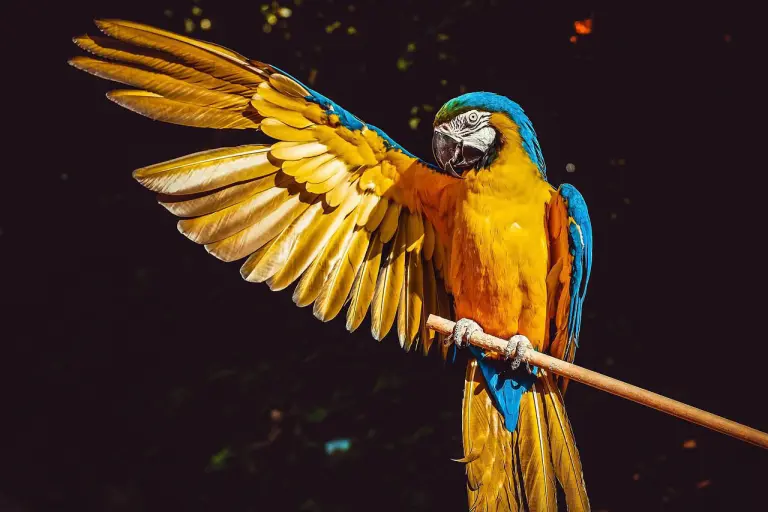
Cargo Hold vs Cabin for Birds: What Really Happens
Can a bird fly in the cargo hold? Here’s what airlines allow, the real risks involved, and why cabin travel is safer for your feathered companion.
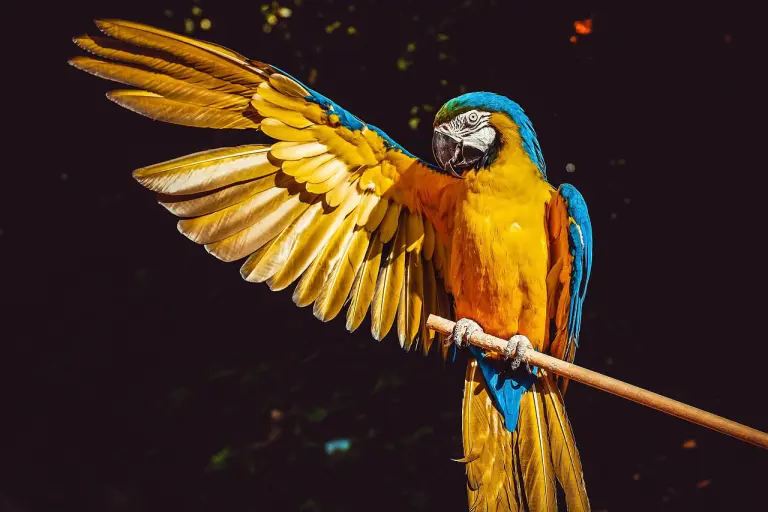
Is Flying Safe for a Parrot? What Canadian Law Actually Requires
Is flying stressful for parrots? Learn what Canadian law requires for safe travel and how to tell if your bird is truly ready to fly.
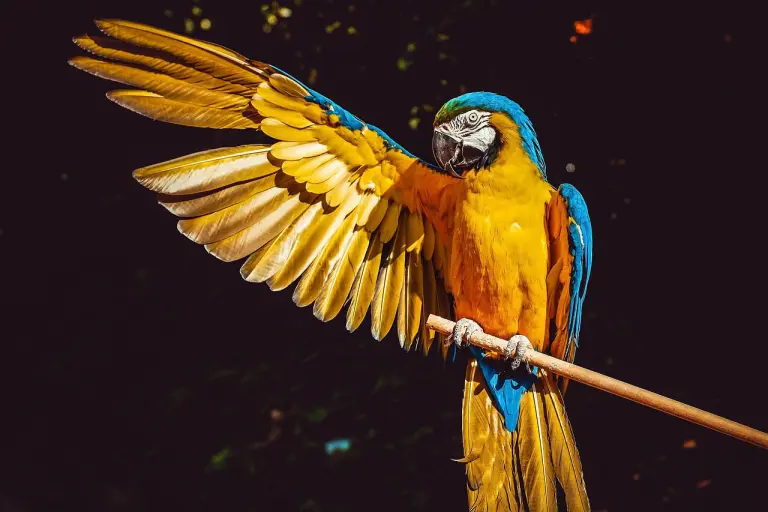
Microchipping and Leg Bands for International Bird Travel
Learn how to microchip your parrot for travel in Canada, plus leg band rules, so your bird meets international ID requirements before you fly.