

Read this first. Regulations change without notice and avian influenza zones can change with little warning. This page is guidance, not authorisation. Confirm every requirement with CFIA, APHIS, USFWS and ECCC before you travel — contact numbers are at the bottom of this page. Do not book a flight or drive to a border on the strength of this page alone.
Your earliest possible travel date isn’t usually set by how fast you can fill out a form. It’s set by clocks — some running backward from today, some forward from an application you haven’t filed yet — and the slowest one wins. Here’s which clocks are actually published, and which aren’t.

The backward clock almost everyone misses: 90 days you may already be running (or not)
Both Canada and the United States build their pet-bird entry rules around the same backward-looking measurement: how long you’ve already owned the bird. Not how fast you can process paperwork going forward — how much time has already passed.
For a parrot-family or song bird entering Canada from the United States, section 13 of the Import Reference Document — incorporated by reference into the Health of Animals Regulations, so this is the actual law and not guidance — requires the owner to declare that the bird has been in their personal possession in Canada or the United States for the 90 days immediately preceding the date of entry, has not been in contact with other birds during that time, and is a personal pet and not for sale. Meet those conditions and section 13 is itself the lawful route in: there’s no Ministerial permit and no veterinary health certificate in that list, only the declaration.
Going the other way, a US-bound pet bird from Canada runs the mirror-image clock. Under 9 CFR 93.101(c)(1), an owner bringing a personally-owned pet bird into the United States at a designated port must sign a statement that the bird has been in their possession for a minimum of 90 days preceding importation, with no contact with poultry or other birds during that time — examples given are exhibitions and aviaries. Meet that, plus a port-of-entry veterinary inspection, and the same section excepts this route from the US import permit, the US veterinary health certificate, and the 30-day US quarantine that otherwise apply to pet birds.
The practical consequence is blunt: if you acquired the bird eight weeks ago, no amount of paperwork speed changes your earliest date. The clock hasn’t finished running, and it can’t be rushed. Count backward from your target travel date first — everything else in this article assumes that count is already satisfied.
Both 90-day clocks, side by side
| Direction | Rule | What has to be true for 90 days | What it excuses |
|---|---|---|---|
| US-origin bird entering Canada | Import Reference Document, s.13 | Personal possession; no contact with other birds; personal pet, not for sale | No Ministerial permit, no veterinary health certificate for a qualifying bird |
| Canada-origin bird entering the US | 9 CFR 93.101(c)(1) | Personal possession; no contact with poultry or other birds | No import permit, no US health certificate, no 30-day quarantine |
Both routes are the animal-health side only. Whether your specific bird’s species also needs a CITES permit or falls under any other wildlife-trade rule is a separate question, answered species by species — our CFIA rules explainer and border walkthrough go through how to check.
The forward clock that’s actually published: ECCC’s CITES permit review
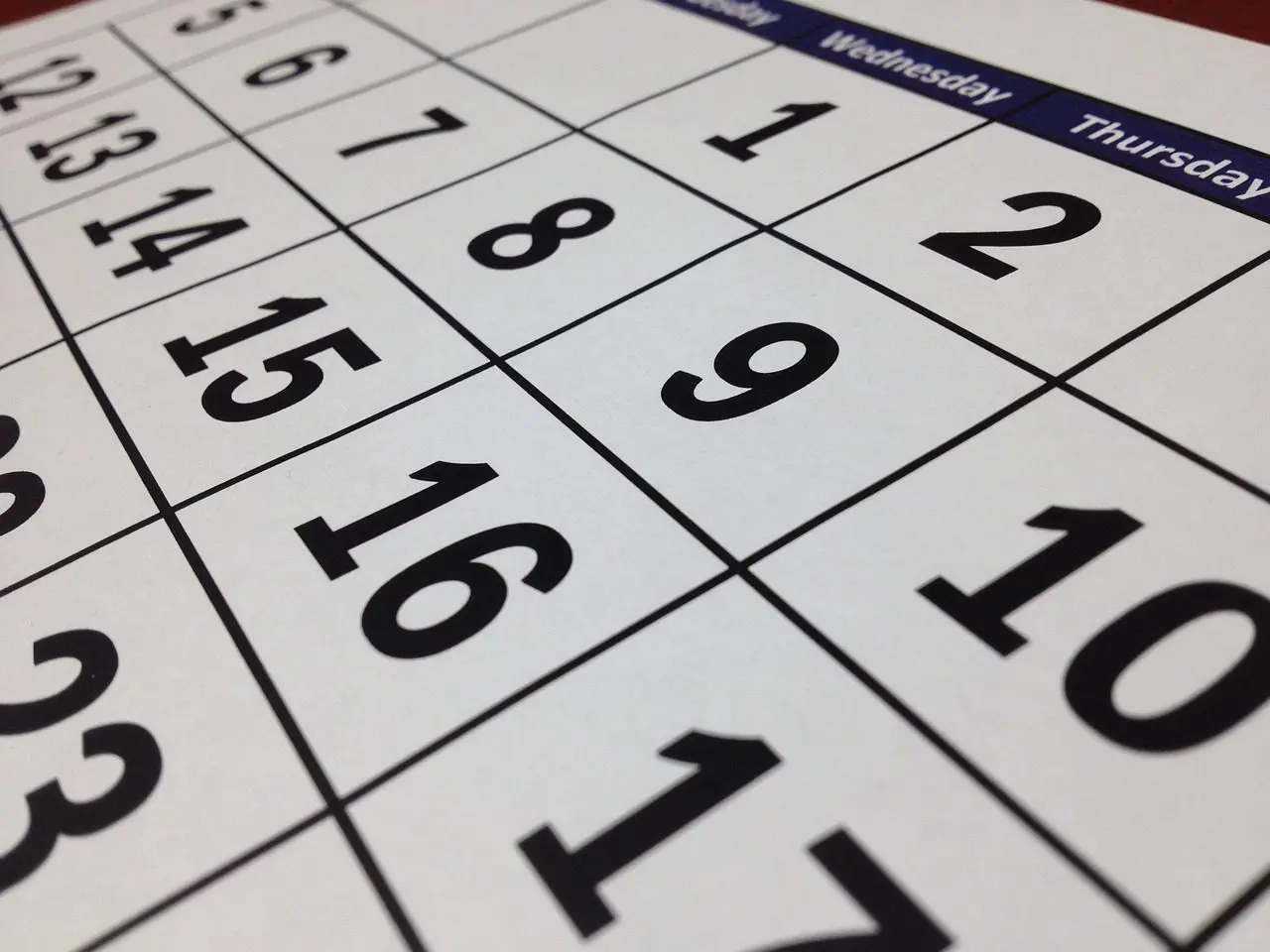
If your bird’s species needs a CITES permit, this is the one duration with a real, sourced number attached to it. Environment and Climate Change Canada publishes a service standard of a decision within 35 calendar days for CITES permit applications, other than hunting trophy exports (21 days) and polar bear exports (70 days), and the ECCC CITES program reports it met that standard on 97% of 4,767 permits issued in the “all other” category between April 2025 and March 2026, against a 90% target.
Two things to plan around, not just one number:
- The clock starts when ECCC receives the application, not when you mail it or submit it online.
- The clock pauses entirely if the application is incomplete. ECCC notifies you, and the time limit stops running until the missing information arrives — an incomplete file doesn’t just queue slower, it stops the clock.
There’s also a genuine conflict between two official ECCC sources that we won’t paper over: the CITES application form page states a period of 40 days may be required to review an application, while the published service standard commits to 35 calendar days for that same category. We can’t tell you which figure ECCC will hit in your case — plan on the longer one, 40 days, and treat 35 as the target rather than a guarantee.
Worth sorting before you file, not after: some CITES applications may require the bird to already carry permanent identification — a closed leg band or a microchip — before the paperwork can be submitted. Unconfirmed: we could not verify this against an official source — specifically, whether identification marking must be completed before filing a CITES export or import permit application, and for which application types. Please confirm with Environment and Climate Change Canada at 1-855-869-8670 or cites@ec.gc.ca before you rely on it for your own bird. If your bird isn’t currently marked, that’s a step to get ahead of the queue, not inside it.
The clock that can add 30 days at the border: US quarantine for birds outside the owner-declaration route
The 90-day owner-declaration route into the US described above isn’t automatic — it’s conditional on meeting 93.101(c)(1). A pet bird that doesn’t qualify for that route falls back to the general pet-bird rules, and under 9 CFR 93.106(a), that means a minimum 30-day quarantine on an “all-in, all-out” basis, at a Customs port, a USDA quarantine facility arranged in advance, or an approved private facility, with individual leg-banding required within 7 days for psittacines.
That’s a real, fixed 30 days you can’t compress. If there’s any doubt about whether your bird meets the owner-declaration conditions — possession length, prior contact with other birds, the port you’re using — resolve it before you book travel, not at the border.
Does boarding pause or break the 90-day clock? (Genuinely unresolved — read this before you rely on either answer)
Both possession clocks require no contact with other birds — the US version specifically names poultry and other birds; the Canadian declaration is broader. That raises an obvious question for anyone using a boarding service during the run-up to a move: does a supervised boarding stay count as “contact with other birds” for the purposes of that 90-day clock?
We don’t know, and we’re not going to guess. We’re a bird boarding business, so answering that question either way in our own favour, or against it, would be a guess dressed up as an answer — and this is exactly the kind of claim that can cost a reader their bird if it’s wrong. Put the question to CFIA or APHIS directly, in writing, and get their answer before you assume boarding is safe (or unsafe) for the clock you’re relying on. The regulator’s answer, not ours, is the one that matters at the border.
Working out your own earliest date
There’s no single countdown we can hand you — several of the durations that would make one possible (a CFIA permit lead time, a USFWS processing time, any airline’s lead time) aren’t published anywhere we can verify, so we won’t invent them. What you can do is lay out what’s actually known against what’s specific to your bird:
| Clock | Direction it runs | Duration | Status |
|---|---|---|---|
| Owner possession (Canada entry, s.13) | Backward from entry date | 90 days minimum | Sourced — CFIA Import Reference Document |
| Owner possession (US entry, 93.101(c)(1)) | Backward from entry date | 90 days minimum | Sourced — 9 CFR 93.101(c)(1) |
| US quarantine, outside 93.101(c)(1) | Forward, at the border | 30 days minimum | Sourced — 9 CFR 93.106(a) |
| ECCC CITES permit review | Forward from receipt | 35 days (service standard) / 40 days (form guidance) | Sourced, but two figures — plan on 40 |
| Identification marking, if not already done | Before some applications | Not confirmed — ask them | Unconfirmed: we could not verify this against an official source — specifically, which applications require it first. Please confirm with Environment and Climate Change Canada at 1-855-869-8670 or cites@ec.gc.ca before you rely on it for your own bird. |
| Boarding stay vs. “contact with other birds” | Runs through your possession clock | Unresolved | Unconfirmed: we could not verify this against an official source — specifically, whether supervised boarding interrupts the 90-day no-contact clock. Please confirm with the Canadian Food Inspection Agency at 1-800-442-2342 before you rely on it for your own bird. |
Start with the possession clock, since it’s the one that can’t be sped up at any price. Then layer the CITES timeline on top if your species needs one — our complete relocation guide walks through how to check whether your bird’s species is listed at all, which is a species-by-species question we won’t shortcut with a general estimate.
What we can — and can’t — help with
We should be plain about this: Bird Sitting Toronto doesn’t file permits, complete applications, liaise with CFIA, ECCC, APHIS or CBSA, act as a customs broker, or give immigration advice. Everything above is information to help you plan, not a service we provide. What we do offer a relocating owner is boarding, if the bird needs somewhere to stay while these clocks run, and help rehoming a bird that genuinely can’t make the move.
If your travel date is weeks or months out because you’re waiting on a CITES permit, or simply counting down a possession clock, your bird still needs somewhere stable to live in the meantime. That’s boarding, month to month, at $Not confirmed — ask them — rates current at time of writing, check our booking page for today’s monthly rate and to get a quote for the length of stay you need.
Frequently asked questions
How far in advance should I start on my bird’s travel paperwork?
Start by checking your possession clock, not your paperwork. If you’ve owned the bird for less than 90 days, no application can move your entry date up — you’re not eligible yet under either country’s owner-declaration route. Once that clock is satisfied, layer any CITES permit timeline on top and plan on the longer of the two published ECCC figures, 40 days.
Does the 90-day possession rule apply in both directions?
Yes. Canada’s section 13 requires 90 days of personal possession for a US-origin parrot-family or song bird entering Canada, and 9 CFR 93.101(c)(1) requires the same 90 days for a Canada-origin pet bird entering the United States. They’re separate rules from separate regulators, but they run on the same length of time.
Is there a quarantine for pet birds entering Canada from the US?
The Import Reference Document doesn’t specify a quarantine for pet parrot-family or song birds under section 13, and the same document does specify quarantine explicitly elsewhere for other animals — which reads as a deliberate omission rather than an oversight. That said, if your bird doesn’t qualify for the section 13 declaration route and instead needs an individual Ministerial permit, any quarantine condition would be set case by case on that permit, not published as a blanket rule. Confirm your bird’s specific route with CFIA before assuming either way.
Can I pay to speed up a CITES permit application?
We have no evidence of an expedited service, and won’t invent one. Unconfirmed: we could not verify this against an official source — specifically, whether ECCC offers any expedited or priority processing for CITES permit applications. Please confirm with Environment and Climate Change Canada at 1-855-869-8670 or cites@ec.gc.ca before you rely on it for your own bird. Plan on the standard timeline and submit a complete application, since an incomplete one pauses the clock entirely rather than simply queuing.
Does boarding my bird while I wait count as “contact with other birds” under the 90-day rule?
We genuinely don’t know, and as a boarding business we’re not going to guess in either direction. Ask CFIA (for Canada entry) or APHIS (for US entry) in writing before you rely on an assumption either way — this is one of the few points in this article where the honest answer is that it isn’t settled.
My bird isn’t CITES-listed — do these clocks still apply to me?
The two 90-day possession clocks and the US 30-day quarantine backstop are animal-health rules, separate from CITES, and they apply regardless of your bird’s CITES status. Whether your specific species is CITES-listed at all is a separate, species-by-species question — see our CFIA rules explainer for how to check.
What if my paperwork isn’t ready by the time I have to travel?
That’s a boarding situation, not a paperwork workaround — we can’t file anything on your behalf or make a bird eligible to travel sooner. If the bird needs to stay behind while permits or possession clocks finish running, see our guide to boarding during a relocation for how that works.
Related guides in this series
- Long-Term Bird Boarding While You Relocate: 30, 60 and 90+ Days
- Moving Abroad and You Can’t Take Your Bird: Board, Rehome, or Wait
- Importing a Pet Bird to Canada: The Complete CFIA Guide (2026)
- Taking Your Bird from Canada to the United States: Driving vs Flying
- African Greys and CITES Appendix I: What Changed in 2017 and What It Means Now
- What It Costs to Move a Pet Bird Out of Canada: Every Government Fee, Sourced (2026)
Who to call before you travel
Confirm every requirement below with the agency itself. These are the people who
can actually authorise your bird’s movement — we cannot.
Every number below was checked against the agency’s own website on
27 July 2026. Government phone numbers and web pages still change without notice.
If one does not connect, find the agency through its own official site rather than trusting
what is printed here.
- Canadian Food Inspection Agency (CFIA) — import and export of live
birds, health certificates, permits: 1-800-442-2342 from
Canada and the US, or 1-613-773-2342 local and
international, 8 am to 7 pm EST Monday to Friday except holidays. CFIA names
services related to travelling with pets as something its area offices handle —
for the GTA that is the Mississauga animal health office,
289-247-4100, 8 am to 4 pm
· inspection.canada.ca - Environment and Climate Change Canada — CITES permitting — export and
import permits for CITES-listed species, and what documents exist for repeat crossings:
1-855-869-8670
· cites@ec.gc.ca - Canada Border Services Agency — what happens at the border itself,
declarations and inspection fees: 1-800-461-9999, Monday to
Friday 8 am to 4 pm local time. Press 0 to reach an agent; CBSA’s published
service standard is to answer within 20 minutes - USDA APHIS — the US pet-travel hub, with separate paths for import,
export and interstate movement, and the list of which birds count as pets at all:
aphis.usda.gov/pet-travel - US Fish & Wildlife Service — CITES and Wild Bird Conservation Act
permits, applied for through the ePermits portal at
fws.gov/permits. The agency
contact centre is 1-800-344-9453
· info@fws.gov
What we can and cannot help with
We cannot help with paperwork. Bird Sitting Toronto is a bird
boarding and care business. We are not a customs broker, an immigration consultant, a
veterinary practice or a legal adviser. We do not file permits, complete applications or
deal with any agency on your behalf, and we cannot guarantee any outcome at any border.
Everything on this page is information only.
There are two things we can do. If your bird cannot travel with you
— because the paperwork is still in progress, the airline will not carry it, or the
timing simply does not work — we can board
your bird in the GTA for as long as you need, including by the month. And if it
becomes clear the bird genuinely cannot come with you, we can help you
rehome it to a good home rather
than leaving you to sort that out alone.
We publish this guide because our boarding clients ask us about it constantly, and
because the answer is genuinely hard to assemble from the primary sources.


Cargo Hold vs Cabin for Birds: What Really Happens
Can a bird fly in the cargo hold? Here’s what airlines allow, the real risks involved, and why cabin travel is safer for your feathered companion.
Is Flying Safe for a Parrot? What Canadian Law Actually Requires
Is flying stressful for parrots? Learn what Canadian law requires for safe travel and how to tell if your bird is truly ready to fly.
Microchipping and Leg Bands for International Bird Travel
Learn how to microchip your parrot for travel in Canada, plus leg band rules, so your bird meets international ID requirements before you fly.