


Read this first. Regulations change without notice and avian influenza zones can change with little warning. This page is guidance, not authorisation. Confirm every requirement with CFIA, APHIS, USFWS and ECCC before you travel — contact numbers are at the bottom of this page. Do not book a flight or drive to a border on the strength of this page alone.
If you’re emigrating and your first instinct is to rehome your bird, check one thing before you do anything else: where are you going? If it’s the United States, a personally-owned pet bird can very likely travel with you, with no import permit, no health certificate and no quarantine — under conditions set out in federal regulation, not in anything BST controls. Read that part first. Rehoming is sometimes the right call, but it should never be the default one made under deadline pressure.
Before you rehome anything: check whether your bird can just come with you
Most Canadians who emigrate go to the United States, and the US is the one destination where the paperwork is genuinely lighter than people assume. Under 9 CFR 93.101(c)(1), a personally-owned pet bird accompanied by its owner from Canada can be imported at a designated port, provided it:
- is caged before release at the port of entry,
- passes a veterinary inspection at the port under 9 CFR 93.105, and
- is covered by a signed owner statement that the bird has been in the owner’s possession for at least 90 days before the crossing, with no contact with poultry or other birds during that time.
Three separate exceptions in the regulation apply specifically to this route: 93.103(a)(1) excepts it from needing an APHIS import permit, 93.104(a) excepts it from the US veterinary health certificate otherwise required for pet birds, and 93.106(a) excepts it from the 30-day US quarantine. That’s a deliberate scheme across three sections of the same regulation, not an accident.
On the Canadian side, section 69(1.1) of the Health of Animals Regulations switches off the CFIA export certificate requirement specifically because the United States doesn’t ask for one on this route. Buffalo and Detroit both appear on the 9 CFR 93.203(b) list of Canadian border ports, so an Ontario owner driving to the US does not need to find an exotic crossing point. One caveat before you plan a route on that: the cross-references in this corner of the regulations do not line up. Section 93.101(c)(1) points readers to “93.103 or 93.203”, but 93.103 is the section on import permits and fees, and the section actually headed Ports designated for the importation of birds is 93.102. What makes the 93.203 list available to a Canadian bird is 93.105(b), which says pet birds of Canadian origin may be inspected at any port listed in 93.102 and 93.203. Confirm the specific crossing with APHIS in writing before driving anywhere with the bird.
We’ve written the full mechanics of this — including the port-of-entry snags nobody mentions — in Taking Your Bird Across the Canada-US Border, and the wider picture of an international move in Moving Abroad With a Pet Bird. If you’re rehoming because you assumed a mountain of paperwork you don’t actually have, read those first. A bird given up under a wrong assumption is a bird that didn’t need to go.
When rehoming genuinely is the right call
None of this means every move is a free pass. There are real, common situations where rehoming — not boarding, not fighting through the paperwork — is the honest answer for the bird. The differences below usually come down to your bird’s species and your destination, not the Canada-to-US route described above.
Your species is CITES-listed
Many popular pet parrots sit on a CITES appendix, and the requirements differ by appendix. Per Environment and Climate Change Canada: Appendix I species need a Canadian CITES export permit and (depending on the destination) an import permit there too; Appendix II species need only the Canadian export permit; Appendix III species need an export permit from the listing country, or a certificate of origin where the species wasn’t listed by the country you’re leaving. There is no single answer for “parrots” as a group — it’s species by species. Unconfirmed: we could not verify this against an official source — specifically, whether your bird’s specific species is CITES-listed, and under which appendix. Please confirm with Environment and Climate Change Canada at 1-855-869-8670 or cites@ec.gc.ca before you rely on it for your own bird.
If a CITES permit does apply, there’s a step almost nobody mentions: ECCC states the permit must be validated by the Canada Border Services Agency at the actual place you leave the country — a CBSA officer completes box 17, “For customs use only” — and that this validation is a condition of the permit itself. An unvalidated permit can mean your bird is held or seized on the other end, permit in hand or not.
Your species isn’t on the US approved list, and you’re heading there
Separately from the animal-health route above, the US Wild Bird Conservation Act runs its own test. Under 50 CFR 15.11(b), it’s unlawful to import a CITES-listed exotic bird species into the US unless it’s also on the approved list in subpart D, or a specific permit has been issued. A species that isn’t CITES-listed at all isn’t caught by this particular rule — but separate provisions catch non-CITES species on a prohibited list, and birds from prohibited countries. Again: species by species, not a blanket answer. Unconfirmed: we could not verify this against an official source — specifically, whether your specific species appears on the 50 CFR 15.33 approved list, or whether a WBCA permit applies to it. Please confirm with the US Fish and Wildlife Service at 1-800-344-9453 or fws.gov/permits before you rely on it for your own bird.
You’re going somewhere other than the US
The lighter Canada-to-US route described above is specific to that direction. For any other destination, the ordinary rules apply in full: a CFIA export certificate under section 69(1) of the Health of Animals Regulations, carrying the official CFIA export stamp under section 69(3), plus whatever CITES permit your species and appendix require, plus whatever the destination country itself demands on entry. Unconfirmed: we could not verify this against an official source — specifically, the destination country’s own pet bird import requirements — confirm with that country’s relevant agency. Please confirm with the relevant agency listed at the bottom of this page before you rely on it for your own bird.
Your airline will not carry the bird
Check this before you treat it as settled, because it is not true of every carrier: WestJet lists “Birds (see entrance requirements)” among the species it accepts in the cabin. But two of Canada’s larger passenger carriers refuse birds outright, and they spell it out in their filed tariffs. Flair Airlines’ Domestic Scheduled Passenger Tariff states: “The Carrier accepts pet dogs and cats for carriage in the passenger cabin of the aircraft… All other pet animals will be refused carriage,” and separately that Flair “does not accept pets of any type for transport in the cargo hold… of any aircraft.” Air Transat’s Canada/US Transborder Tariff is just as direct: “ONLY DOMESTIC CATS AND DOGS ARE ACCEPTED FOR CARRIAGE. ALL OTHER ANIMALS, EXCEPT CERTIFIED SERVICE ANIMALS, ARE NOT ACCEPTED.” Neither carrier has a fare, fee or process for a pet bird — the fees they publish for animals apply only to cats and dogs. Unconfirmed: we could not verify this against an official source — specifically, whether any other specific airline you’re considering accepts pet bird carriage — ask that airline directly, since we’ve only confirmed Flair and Air Transat. Please confirm with the relevant agency listed at the bottom of this page before you rely on it for your own bird.
You haven’t had the bird 90 days
The Canada-to-US pet bird route above depends on a signed statement that the bird has been in your possession for the 90 days immediately preceding entry, with no contact with other birds. If your bird is newer to your home than that, this specific route isn’t available to you yet, regardless of species.
The move itself is wrong for this bird
Sometimes the honest answer has nothing to do with borders. A bird that’s badly stressed by travel, a household that can’t manage a long flight or driving trip with a caged animal, or a genuine change in who can care for the bird day to day — these are legitimate reasons on their own, and they don’t need a regulatory justification to be valid.
If you’re rehoming, do it in a way that doesn’t wreck the bird
A parrot can outlive several owners. The question a rehoming placement has to answer isn’t just “does this person want the bird now” but “is this person prepared for years, possibly decades, of the bird’s actual behaviour.” A few things genuinely protect a bird through this process:
- Don’t do it same-day. A rushed handover the week you fly out is the worst version of this. Start the process as early as your moving timeline allows.
- Send the environment, not just the bird. Current diet, cage, favourite toys, and a written daily routine let the new home change gradually rather than all at once — sudden diet and environment changes are hard on birds even without a move layered on top.
- Document everything, including the hard parts. Age, band or microchip number, vet history, and behaviour — including biting, screaming, plucking, or being strongly bonded to one person. A placement that fails because the new owner wasn’t told what they were taking on is worse for the bird than a slower placement built on an honest picture.
- Don’t oversell it. The temptation under time pressure is to present the bird as easier than it is. That’s how birds bounce between homes.
BST maintains a rehoming portal for exactly this kind of situation, but we’re not going to claim we screen or guarantee adopters beyond helping connect a bird with someone looking for one — that judgment call is still yours to make with the documentation above in hand.
The middle option: board the bird while the move sorts itself out
Rehoming and “just figure it out at the border” aren’t the only two choices. If your bird’s route is genuinely blocked right now — a permit that hasn’t cleared, a CITES validation still pending, housing at the other end that isn’t ready — boarding the bird here while that resolves is a real third option, and one people often don’t think of under deadline pressure.
This is something BST actually does: bird boarding by the day, week or month, with daily update videos through the client portal so you can see how your bird is doing while you’re mid-move. For a relocation that runs weeks or months rather than days, the monthly rate is usually the relevant one:
| Bird size | Example species | Monthly rate |
|---|---|---|
| Small | Budgie, canary, finch | $360/month |
| Medium | Conure, cockatiel, Quaker | $480/month |
| Large | Caique, ringneck, pionus | $600/month |
| Extra large | Eclectus, African grey, cockatoo | $720/month |
Rates current at time of writing — check /pricing/ for today’s. All rates include daily photos and video, food, water, fresh produce and interaction; multiple birds housed together get a discount on each additional bird; statutory holidays and peak season carry a surcharge; a deposit secures your dates.
To be clear about what this does and doesn’t solve: BST boards your bird. We don’t file permits, complete CITES or CFIA paperwork, liaise with any agency, or act as a customs broker. That part is still yours (or an agent’s) to handle — boarding just buys you the time to do it properly instead of rehoming under a deadline. We cover staging a move this way in more detail in What Do I Do With My Bird While I Sort Out the Move?
Frequently asked questions
Do I have to rehome my bird if I’m moving to the US?
Not automatically. Under 9 CFR 93.101(c)(1), a personally-owned pet bird can travel with its owner from Canada with no US import permit, no US health certificate and no quarantine — provided it’s been in your possession 90 days with no contact with other birds, and it clears a port-of-entry inspection. This is specific to travel from Canada to the US; other destinations follow different rules.
What if my bird is CITES-listed?
The requirements depend on which CITES appendix your species sits on, and differ for import versus export. Unconfirmed: we could not verify this against an official source — specifically, your bird’s CITES appendix status and the corresponding permit requirement. Please confirm with Environment and Climate Change Canada at 1-855-869-8670 or cites@ec.gc.ca before you rely on it for your own bird. If a permit is issued, it must also be validated by CBSA at your actual point of exit — an unvalidated permit isn’t accepted by the destination.
Does the 90-day US pet bird route apply if I’m moving somewhere other than the US?
No. That specific exception is written for entry into the United States from Canada. Other countries set their own import conditions for pet birds, and Canada’s own CFIA export certificate and stamp requirements apply in full for any destination other than the US.
Can I just fly with my bird instead of driving?
Check directly with your specific airline. Two of Canada’s carriers, Flair and Air Transat, state plainly in their published tariffs that they don’t carry pet birds in the cabin or the hold. Unconfirmed: we could not verify this against an official source — specifically, whether any other airline you’re considering permits pet bird carriage — ask that carrier directly. Please confirm with the relevant agency listed at the bottom of this page before you rely on it for your own bird.
Is boarding a realistic alternative while I sort out permits?
Yes — that’s a service BST actually offers, priced by the day, week or month, with the monthly rate usually most relevant for a relocation timeline. It buys time; it doesn’t replace the paperwork, which BST doesn’t handle.
What should I document before handing my bird to a new owner?
Age, band or microchip number, vet history, current diet and routine, and an honest account of behaviour — including biting, screaming, plucking, or strong one-person bonding. Understating these is how a placement fails and the bird ends up moved again.
Does BST screen or guarantee the people who adopt through the rehoming portal?
BST helps connect a bird looking for a home with someone looking for a bird. We don’t screen or guarantee adopters beyond that — the judgment of whether a specific placement is right is still yours to make.
If your bird’s paperwork just needs time rather than a permanent decision, a boarding quote can buy you that time while things resolve.
Related guides in this series
- Moving Abroad and You Can’t Take Your Bird: Board, Rehome, or Wait
- Importing a Pet Bird to Canada: The Complete CFIA Guide (2026)
- Long-Term Bird Boarding While You Relocate: 30, 60 and 90+ Days
- Taking Your Bird from Canada to the United States: Driving vs Flying
- Bringing a Pet Bird to Canada From Outside the US: Why You Need a Permit
- Can I Fly Inside Canada With My Parrot? Domestic Rules by Carrier
- Snowbirds: Six Months in Florida With — or Without — Your Bird
Who to call before you travel
Confirm every requirement below with the agency itself. These are the people who
can actually authorise your bird’s movement — we cannot.
Every number below was checked against the agency’s own website on
27 July 2026. Government phone numbers and web pages still change without notice.
If one does not connect, find the agency through its own official site rather than trusting
what is printed here.
- Canadian Food Inspection Agency (CFIA) — import and export of live
birds, health certificates, permits: 1-800-442-2342 from
Canada and the US, or 1-613-773-2342 local and
international, 8 am to 7 pm EST Monday to Friday except holidays. CFIA names
services related to travelling with pets as something its area offices handle —
for the GTA that is the Mississauga animal health office,
289-247-4100, 8 am to 4 pm
· inspection.canada.ca - Environment and Climate Change Canada — CITES permitting — export and
import permits for CITES-listed species, and what documents exist for repeat crossings:
1-855-869-8670
· cites@ec.gc.ca - Canada Border Services Agency — what happens at the border itself,
declarations and inspection fees: 1-800-461-9999, Monday to
Friday 8 am to 4 pm local time. Press 0 to reach an agent; CBSA’s published
service standard is to answer within 20 minutes - USDA APHIS — the US pet-travel hub, with separate paths for import,
export and interstate movement, and the list of which birds count as pets at all:
aphis.usda.gov/pet-travel - US Fish & Wildlife Service — CITES and Wild Bird Conservation Act
permits, applied for through the ePermits portal at
fws.gov/permits. The agency
contact centre is 1-800-344-9453
· info@fws.gov
What we can and cannot help with
We cannot help with paperwork. Bird Sitting Toronto is a bird
boarding and care business. We are not a customs broker, an immigration consultant, a
veterinary practice or a legal adviser. We do not file permits, complete applications or
deal with any agency on your behalf, and we cannot guarantee any outcome at any border.
Everything on this page is information only.
There are two things we can do. If your bird cannot travel with you
— because the paperwork is still in progress, the airline will not carry it, or the
timing simply does not work — we can board
your bird in the GTA for as long as you need, including by the month. And if it
becomes clear the bird genuinely cannot come with you, we can help you
rehome it to a good home rather
than leaving you to sort that out alone.
We publish this guide because our boarding clients ask us about it constantly, and
because the answer is genuinely hard to assemble from the primary sources.


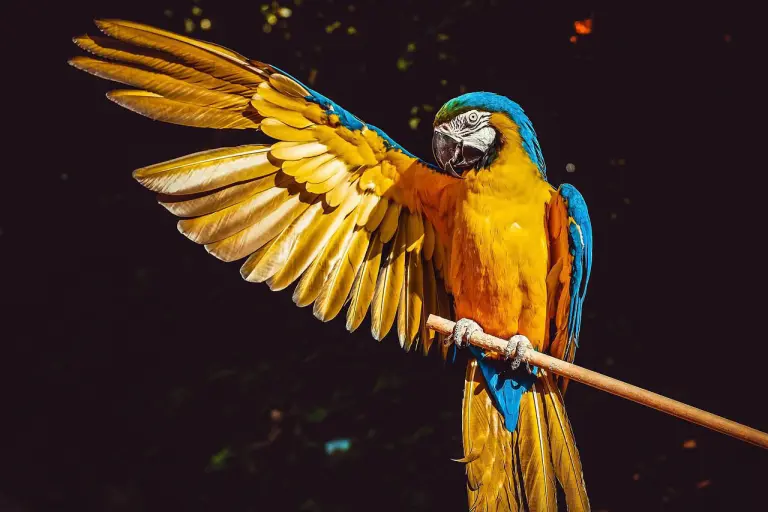
Cargo Hold vs Cabin for Birds: What Really Happens
Can a bird fly in the cargo hold? Here’s what airlines allow, the real risks involved, and why cabin travel is safer for your feathered companion.
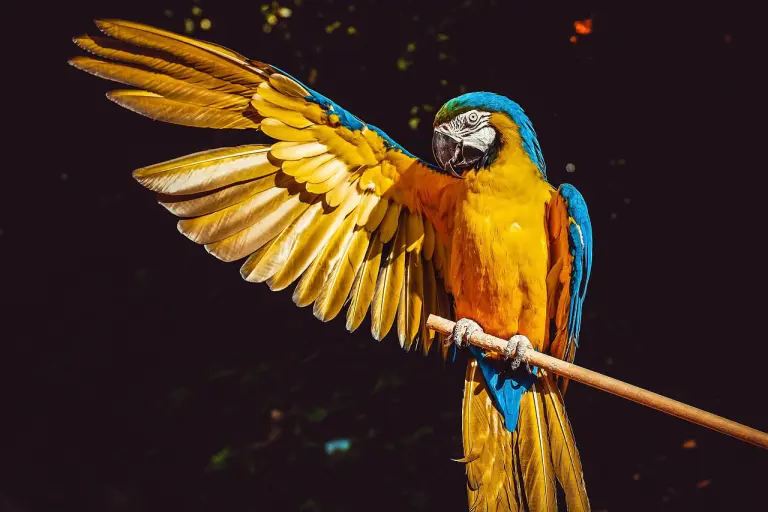
Is Flying Safe for a Parrot? What Canadian Law Actually Requires
Is flying stressful for parrots? Learn what Canadian law requires for safe travel and how to tell if your bird is truly ready to fly.
Microchipping and Leg Bands for International Bird Travel
Learn how to microchip your parrot for travel in Canada, plus leg band rules, so your bird meets international ID requirements before you fly.