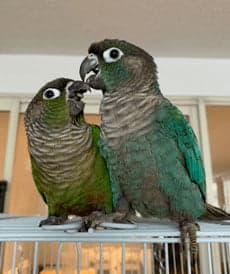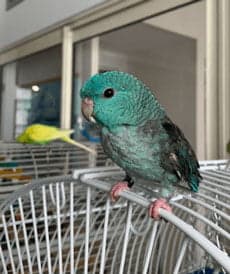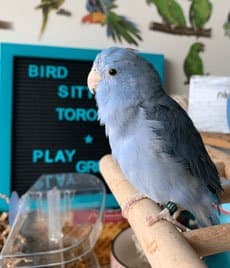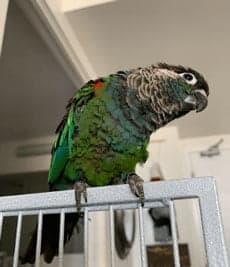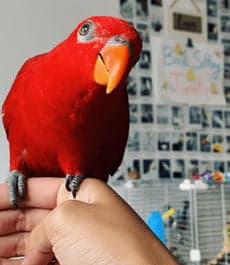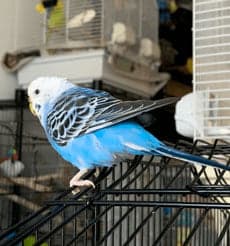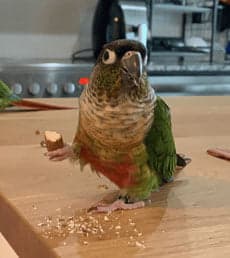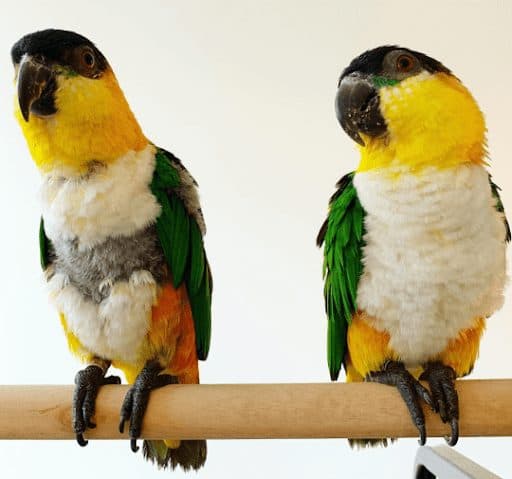
Food, water and a safe cage are the easy part. The part people underestimate is that a parrot is an intelligent animal with nothing to do, and that a bird with nothing to do does not simply sit there being content.
What boredom actually looks like
It shows up as behaviour, and the behaviour is usually what brings people to us:
- feather plucking — the most common, and almost never a feather problem
- screaming — not for attention so much as for something to happen
- chewing whatever is nearest, including things you would rather it did not
None of these is a bird being difficult. They are a bird with hours to fill.
Why it happens
In the wild a bird spends most of its day working: finding food, moving between places, keeping track of a flock. A cage removes all three at once and replaces them with a bowl that is already full. The foraging is the part people most often forget — for a wild bird, eating is the day's activity, not a two-minute event.
What helps
Rotate the toys. Not more toys — different ones, on a cycle. A toy that has been there for six months is furniture.
Make food take effort. Anything that turns eating from a bowl into a small puzzle gives back the part of the day the cage took away. This is the single change that does the most.
Time out of the cage, with people in the room. A social bird alone in a quiet house is bored in a way no toy solves. It is why our own boarding room has people in it rather than being a quiet room full of cages.
Vary what they can see and hear. A different view, a different part of the house.
It is a physical thing too
A bird that has something to do moves. A bird that has nothing to do sits, and a bird that sits gets heavy — which brings its own problems, none of them quick to undo.
While you are away
The same rules apply when somebody else is doing it, which is most of what a boarding day here is: out-of-cage time, interaction, and somebody noticing the day a bird stops being interested in something.