


Read this first. Regulations change without notice and avian influenza zones can change with little warning. This page is guidance, not authorisation. Confirm every requirement with CFIA, APHIS, USFWS and ECCC before you travel — contact numbers are at the bottom of this page. Do not book a flight or drive to a border on the strength of this page alone.
US Fish and Wildlife Service can refuse a pet parrot even after Canadian and American animal-health authorities have cleared it. That’s because the Wild Bird Conservation Act is a completely separate law from anything CFIA or USDA APHIS enforces — it asks whether your species is CITES-listed and missing from an approved list, not whether your bird is healthy.
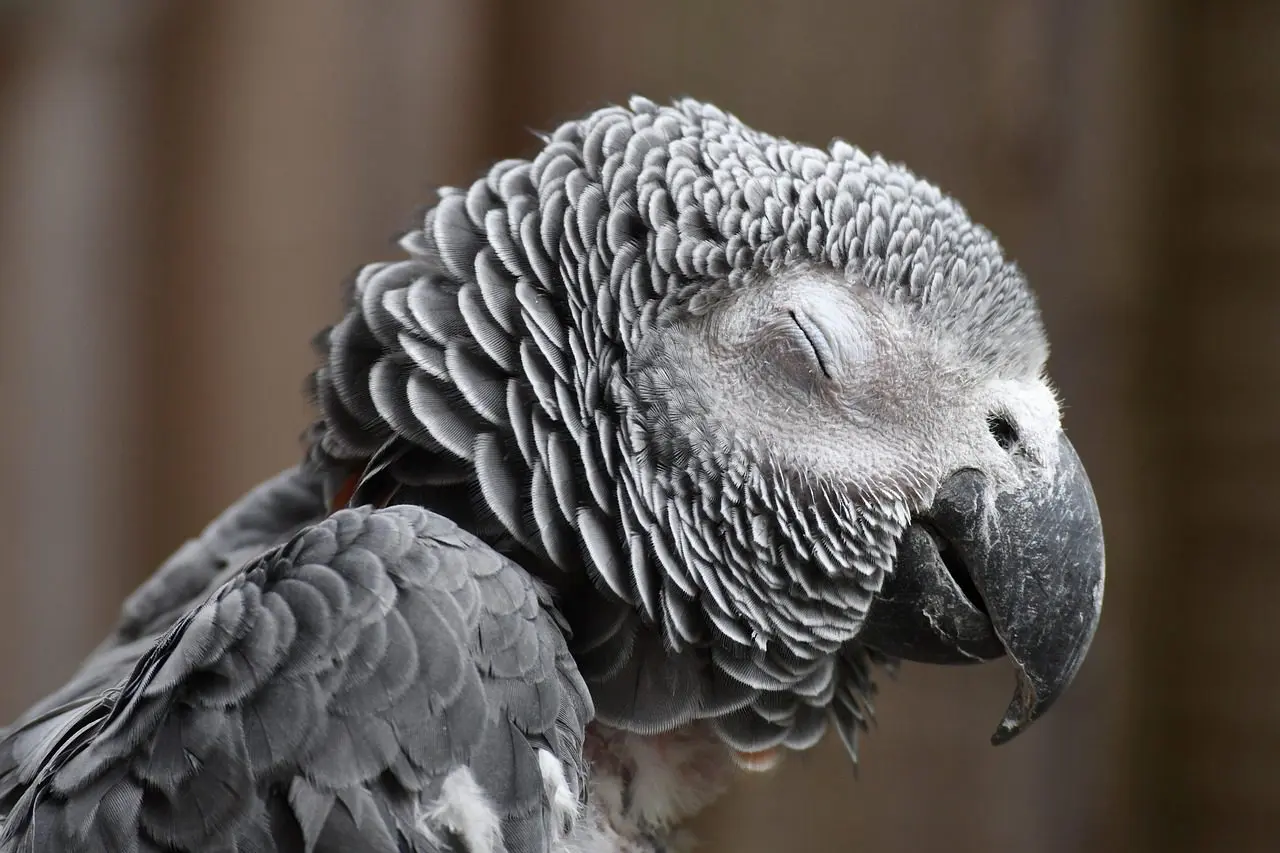
Two federal systems, two different questions
When people research taking a parrot into the United States, they usually find the animal-health side first: paperwork about health certificates, inspections, quarantine. That’s the domain of USDA’s Animal and Plant Health Inspection Service (APHIS) and, on the Canadian side, CFIA. Those agencies ask one question: is this bird a disease risk?
The Wild Bird Conservation Act (WBCA) asks a completely different question, and it’s enforced by a completely different agency — the U.S. Fish and Wildlife Service. It doesn’t care whether your bird is healthy. It cares whether your species is one that international trade law is trying to protect from over-collection in the wild. A perfectly healthy, hand-raised, third-generation captive-bred parrot can still be turned away at the US border under this law, with a completely clean APHIS record. Clearing one system tells you nothing about the other. If you’re also working through the Canada-US crossing itself, our Canada-US border walkthrough covers the animal-health side in detail — this article is about the layer most people never find until it stops them at the counter.
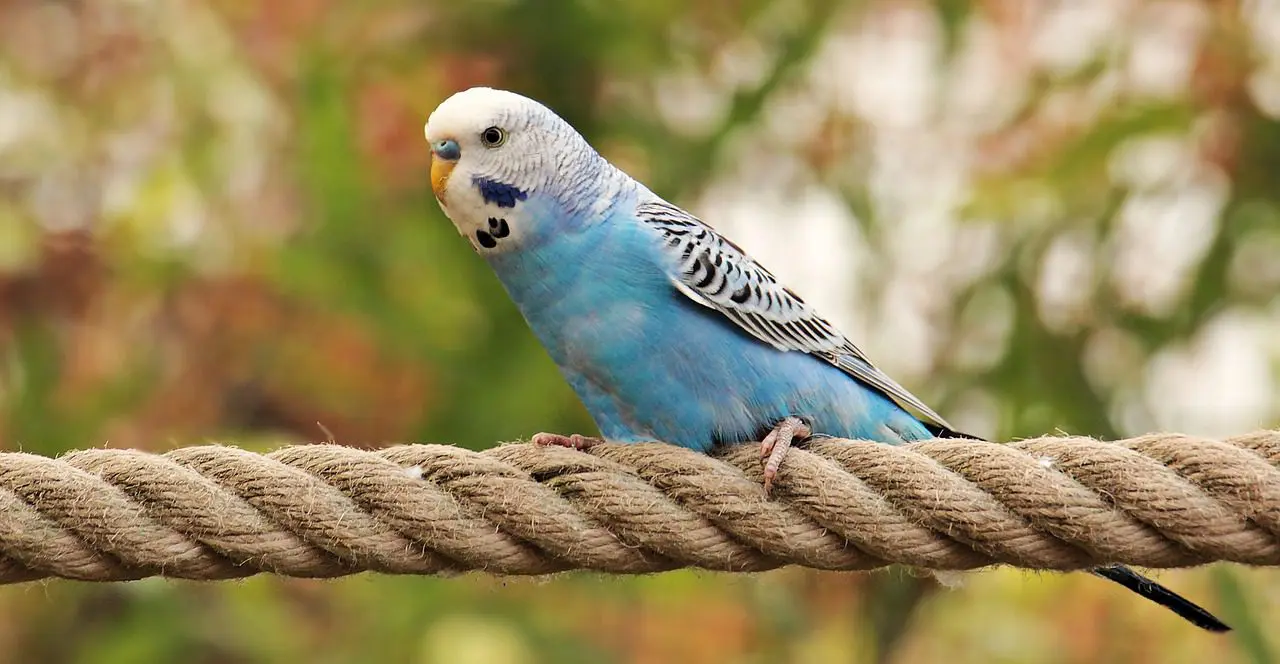
The two-part test that actually decides whether your parrot can enter the US
The rule that does the actual damage is 50 CFR 15.11(b). It makes it unlawful to import into the United States any exotic bird species that is listed in the CITES Appendices and is not on the approved list in subpart D of the same regulation, unless a permit has been issued. Two conditions, both have to be true for the prohibition to bite:
- The species is listed under CITES (any of the three appendices), and
- The species does not appear on the 50 CFR 15.33 “approved list” of captive-bred exotic bird species.
A species that isn’t CITES-listed at all isn’t caught by this particular rule (though separate provisions in 15.11 cover species-specific prohibited lists and prohibited countries of origin, which are outside the scope of this article). Whether your own species is CITES-listed is a species-by-species question — check it against ECCC’s CITES species checklist rather than assuming either way — so the 15.33 list is where the real answer lives.
Which parrots are actually on the approved list
Section 15.33 names species by species, and in several cases by named colour form. Here’s how the split looks for birds people actually keep as pets:
| On the 15.33 approved list | Not on the 15.33 approved list |
|---|---|
| Budgerigar | African grey parrot |
| Cockatiel | All macaws |
| Indian ringneck parakeet | All amazons |
| Peach-faced and masked lovebirds | All cockatoos |
| Jendaya conure (specifically Aratinga jandaya) | Every other conure |
| Lineolated parakeet, Pacific parrotlet | Eclectus |
| Bourke’s, blue-winged, elegant and turquoise/scarlet-chested parrots | Caiques |
| Rosellas, princess/regent/superb parrots, red-rumped and mulga parakeets | Senegals |
| Alexandrine parakeet (blue and lutino forms), red-capped parrot, scaly-breasted lorikeet | Pionus |
Being on the approved list is not a clean bill of health.
The 50 CFR 15.33 list settles one question only — whether the Wild Bird Conservation Act
prohibits the import. It says nothing at all about CITES, which is a separate treaty
administered in Canada by
Environment and Climate Change Canada
and enforced by its own permits. A number of the species on the approved side are still
CITES-listed, and a CITES-listed bird needs its CITES paperwork whether or not the WBCA
lets it in. Clearing one regime never clears the other. Before you travel, check your
species’ CITES status with ECCC on
1-855-869-8670 or
cites@ec.gc.ca — do not read the left-hand column
as “no paperwork of any kind”.
This is the single clearest answer to “is my bird one of the hard ones to take into the US.” If your parrot is on the left side, the WBCA prohibition doesn’t reach it and no WBCA permit is needed. If it’s on the right side — which covers most of the larger, longer-lived parrots people keep as companions — a permit route is required before the bird can legally enter the country. Unconfirmed: we could not verify this against an official source — specifically, your bird’s exact species, and where relevant its named colour form, still appears on (or is still absent from) the current 50 CFR 15.33 approved list — U.S. Fish and Wildlife Service, before travel. The list is amended from time to time and a species can move. Please confirm with the US Fish and Wildlife Service at 1-800-344-9453 or fws.gov/permits before you rely on it for your own bird.
If your species isn’t on the list: the personal-pet permit under 15.25
For a species caught by the prohibition, the route most pet owners would use is the personal-pet import permit at 50 CFR 15.25. It has real, hard limits — not paperwork formalities, but conditions that will simply disqualify an applicant who doesn’t meet them:
- Residence, not citizenship. The regulation requires documented continuous residence outside the United States for at least one year — it appears both as an application requirement and as an issuance criterion. It does not require US citizenship or returning-resident status. On the face of the rule, a Canadian who has lived in Canada for a year or more meets this test. Unconfirmed: we could not verify this against an official source — specifically, this residency criterion is met on your specific facts before applying — U.S. Fish and Wildlife Service. Please confirm with the US Fish and Wildlife Service at 1-800-344-9453 or fws.gov/permits before you rely on it for your own bird.
- A hard cap of two birds per year. No individual may import more than two exotic birds as personal pets in any year — the regulation says “in any year”, not “in any calendar year”, so do not assume a December/January split buys you a second slot. This limit is written into the regulation three separate times — as an application rule, an issuance criterion, and a standing permit condition — which is a strong signal it’s enforced strictly, not treated as a soft guideline.
- No resale, ever. Every personal-pet permit carries the condition that the bird cannot be sold after it’s imported into the United States. This is a permanent condition of the permit, not a time-limited one.
- Proof of legal origin. The regulation sets out exactly what’s accepted as evidence: a copy of any CITES export or re-export permit under which the bird originally left its country of origin; or, if none exists, a sales receipt or signed statement from the seller with their name, address, sale date and identifying details of the bird; or a signed breeder’s certificate with the breeder’s name, address, sale/transfer date, species and hatch date. If you can’t produce one of these three, the application has a real problem before it even gets to the residency and quota questions.
None of this is quick paperwork you fill out at check-in. It’s an application that has to be prepared, evidenced and approved in advance, and the two-bird annual cap alone means a family relocating with a small flock may not be able to bring every bird across on the same permit type in the same year. If you’re still deciding what happens to a bird that a permit process can’t move with you, our complete guide to moving abroad with a pet bird walks through the options.
Why “it’s just a quick trip” or “we’re driving, not flying” doesn’t help
Two assumptions trip people up here, and both are wrong under this specific law.
First: 50 CFR 15.11 draws no distinction between arriving by land or by air. The prohibition is on “import into the United States,” full stop — there’s no separate, lighter rule for driving across at a land crossing. The land-versus-air distinction that shows up on the USDA animal-health side simply doesn’t carry over to the Wild Bird Conservation Act. The WBCA question is entirely about the species, not the mode of travel.
Second: there’s no exemption in 15.11 for a short trip, a weekend visit, a bird show, or a bird that’s only coming along for a season and going home again. The prohibitions are written against “import” generally, with no carve-out for temporary, personal-pet or accompanying travel. The only stated escapes are a subpart C permit (like the 15.25 route above) or a bird bred at a qualifying foreign facility under subpart E. Unconfirmed: we could not verify this against an official source — specifically, there is no applicable short-visit or accompanying-traveller exemption for your specific circumstances — U.S. Fish and Wildlife Service. Please confirm with the US Fish and Wildlife Service at 1-800-344-9453 or fws.gov/permits before you rely on it for your own bird.
African greys: the same bird, two separate permit problems
African grey parrots are worth calling out on their own, because they sit at the intersection of two regimes most owners assume are one and the same.
Environment and Climate Change Canada confirms that the African grey (Psittacus erithacus) was moved from CITES Appendix II to Appendix I at CoP17, with the change taking effect 2 January 2017. Canada implements this through amendments to Schedule I of the Wild Animal and Plant Trade Regulations under WAPPRIITA. Appendix I is the strictest category CITES has, and ECCC states plainly that under it, leaving Canada with an African grey now requires an import permit from the destination country, in addition to the CITES export permit ECCC issues — under the old Appendix II listing, only the export permit was needed.
Layer the WBCA on top of that: African greys are not on the 50 CFR 15.33 approved list, so entering the US separately requires a WBCA permit such as the 15.25 personal-pet route described above. That means an African grey moving from Canada to the US can need a Canadian CITES export permit, a US import authorisation to satisfy the CITES side, and a separate WBCA permit to satisfy Fish and Wildlife’s conservation rules — three different approvals from two different countries, none of which substitutes for another. Unconfirmed: we could not verify this against an official source — specifically, the current, complete permit sequence required to move an African grey from Canada into the United States, and whether any of these approvals can run in parallel. Please confirm with the US Fish and Wildlife Service at 1-800-344-9453 or fws.gov/permits before you rely on it for your own bird.
It’s also worth knowing that the Certificate of Ownership some owners find when researching CITES paperwork is not built for this situation at all — Environment and Climate Change Canada states outright that it’s for someone taking a pet abroad on vacation or living part of the year elsewhere, and instructs anyone who is moving to use the export or re-export application instead. Getting the form wrong wastes the review window, and ECCC states that an incomplete application pauses entirely until the missing pieces arrive.
What this means if you’re planning a move
The practical takeaway: check your species against the 50 CFR 15.33 list before you assume USDA and CFIA clearance is the whole story. If your bird isn’t on it, budget real time for the 15.25 permit process — gathering origin evidence, confirming your residency status meets the test, and accounting for the two-bird annual cap if you’re moving more than one exotic bird. None of this is something a boarding business, a shipping agent or a customs broker can shortcut for you; it runs through Fish and Wildlife on its own timeline. Bird Sitting Toronto doesn’t file permits, complete applications, or act on any owner’s behalf with USFWS, ECCC, CBSA or CFIA — the border and permit content on this site is information only, meant to help you ask the right people the right questions.
Frequently asked questions
My bird passed its health check with no issues. Does that mean it can enter the US?
Not necessarily. An APHIS or CFIA health clearance answers the disease-risk question. It says nothing about whether your species is CITES-listed and missing from the 50 CFR 15.33 approved list, which is the separate test the Wild Bird Conservation Act applies through the US Fish and Wildlife Service.
Is the Wild Bird Conservation Act about my bird’s health?
No. It’s a conservation law aimed at protecting wild bird populations from over-collection for the pet trade. It asks whether your species’ trade status and captive-bred approval status permit importation at all — a question that exists regardless of how healthy your individual bird is.
My parrot species isn’t on the CITES list at all. Does the WBCA still apply?
50 CFR 15.11(b) specifically requires CITES listing as one half of the two-part test. If your species genuinely isn’t CITES-listed, that particular prohibition doesn’t reach it — though separate provisions of 15.11 cover species-specific and country-specific prohibited lists that are outside this article. Unconfirmed: we could not verify this against an official source — specifically, your species’ current CITES listing status and whether any other 15.11 provision applies — U.S. Fish and Wildlife Service. Please confirm with Environment and Climate Change Canada at 1-855-869-8670 or cites@ec.gc.ca before you rely on it for your own bird.
Can I get a WBCA permit if I’m a Canadian, not a US citizen?
The regulation’s stated test for the personal-pet permit is documented continuous residence outside the United States for at least one year, not US citizenship. On its face, a Canadian resident of a year or more can meet that criterion, but you should confirm it applies cleanly to your own circumstances before relying on it.
How many birds can I bring in under a personal-pet WBCA permit?
The regulation caps this at two exotic birds per individual in any year (the regulation says “in any year”, not “calendar year” — do not assume a December/January split buys a second slot), and states it three separate times as an application rule, an issuance criterion, and a standing permit condition. If you’re relocating with a larger flock, this cap needs to factor into your timeline.
Can I sell my parrot in the US after importing it under this permit?
No. Every personal-pet WBCA permit carries a standing condition that the bird cannot be sold after it’s imported into the United States.
Does it matter whether I fly or drive across the border?
Not for this particular law. 50 CFR 15.11 makes no distinction between land and air entry, and provides no exemption for a short or temporary trip. The prohibition applies to “import into the United States” regardless of route or trip length.
Where does Bird Sitting Toronto fit into any of this?
Nowhere on the permit side — we don’t file WBCA applications, CITES paperwork, or act on any owner’s behalf with US Fish and Wildlife, ECCC, CBSA or CFIA. What we can do is board your bird in Mississauga while a permit works its way through the process. We have not been able to source a published processing time for a WBCA personal-pet permit, so do not plan around any figure you see quoted elsewhere — ask the US Fish and Wildlife Service what to expect for your own application, and treat the answer as the planning date.
If your relocation timeline now depends on a permit that’s out of anyone’s hands but the agency’s, your bird still needs somewhere stable to live in the meantime. That’s boarding, and it’s the one part of this we can actually help with — see our boarding options for relocations in progress or get a quote directly on the booking page.
Related guides in this series
- Moving Abroad and You Can’t Take Your Bird: Board, Rehome, or Wait
- Importing a Pet Bird to Canada: The Complete CFIA Guide (2026)
- Bringing a Pet Bird to Canada From Outside the US: Why You Need a Permit
- Long-Term Bird Boarding While You Relocate: 30, 60 and 90+ Days
- Taking Your Bird from Canada to the United States: Driving vs Flying
- Two Unsettled Questions About Taking a Parrot to the US (and How to Get an Answer in Writing)
Who to call before you travel
Confirm every requirement below with the agency itself. These are the people who
can actually authorise your bird’s movement — we cannot.
Every number below was checked against the agency’s own website on
27 July 2026. Government phone numbers and web pages still change without notice.
If one does not connect, find the agency through its own official site rather than trusting
what is printed here.
- Canadian Food Inspection Agency (CFIA) — import and export of live
birds, health certificates, permits: 1-800-442-2342 from
Canada and the US, or 1-613-773-2342 local and
international, 8 am to 7 pm EST Monday to Friday except holidays. CFIA names
services related to travelling with pets as something its area offices handle —
for the GTA that is the Mississauga animal health office,
289-247-4100, 8 am to 4 pm
· inspection.canada.ca - Environment and Climate Change Canada — CITES permitting — export and
import permits for CITES-listed species, and what documents exist for repeat crossings:
1-855-869-8670
· cites@ec.gc.ca - Canada Border Services Agency — what happens at the border itself,
declarations and inspection fees: 1-800-461-9999, Monday to
Friday 8 am to 4 pm local time. Press 0 to reach an agent; CBSA’s published
service standard is to answer within 20 minutes - USDA APHIS — the US pet-travel hub, with separate paths for import,
export and interstate movement, and the list of which birds count as pets at all:
aphis.usda.gov/pet-travel - US Fish & Wildlife Service — CITES and Wild Bird Conservation Act
permits, applied for through the ePermits portal at
fws.gov/permits. The agency
contact centre is 1-800-344-9453
· info@fws.gov
What we can and cannot help with
We cannot help with paperwork. Bird Sitting Toronto is a bird
boarding and care business. We are not a customs broker, an immigration consultant, a
veterinary practice or a legal adviser. We do not file permits, complete applications or
deal with any agency on your behalf, and we cannot guarantee any outcome at any border.
Everything on this page is information only.
There are two things we can do. If your bird cannot travel with you
— because the paperwork is still in progress, the airline will not carry it, or the
timing simply does not work — we can board
your bird in the GTA for as long as you need, including by the month. And if it
becomes clear the bird genuinely cannot come with you, we can help you
rehome it to a good home rather
than leaving you to sort that out alone.
We publish this guide because our boarding clients ask us about it constantly, and
because the answer is genuinely hard to assemble from the primary sources.


Cargo Hold vs Cabin for Birds: What Really Happens
Can a bird fly in the cargo hold? Here’s what airlines allow, the real risks involved, and why cabin travel is safer for your feathered companion.
Is Flying Safe for a Parrot? What Canadian Law Actually Requires
Is flying stressful for parrots? Learn what Canadian law requires for safe travel and how to tell if your bird is truly ready to fly.
Microchipping and Leg Bands for International Bird Travel
Learn how to microchip your parrot for travel in Canada, plus leg band rules, so your bird meets international ID requirements before you fly.